Friday, June 28, 2013

Of Garters and Ribbons

A snake basks in a sunny spot on a fallen log or in the foliage of a low shrub beside a shallow wetland. Your first impression: garter snake (Thamnophis sirtalis). But a second look (quick, before it slips away into the water) reveals three very well defined yellow stripes down its dark back and sides. There are no dark splotches or other markings to interfere with its clean yellow and black lines. Its slim head is black, but its face below the eyes is pure white. Unlike the stout garter snake, its body is sleek and its tail is extraordinarily long. This is not the ubiquitous garter snake, but the uncommon eastern ribbon snake (Thamnophis s. sauritus). 


The eastern ribbon snake ranges from southeastern Maine and eastern Pennsylvania south to northern Georgia. Disjunct populations occur west to Ohio snakes, year of the snake,eastern ribbon snakeand south to the Gulf Coast. It is locally uncommon in southern New England, with Connecticut’s largest populations occurring in shallow wetlands near basalt (trap rock) ridges. Open shrubby or grassy areas along wooded swamps, fens, bogs, vernal pools, streams and ponds are the perfect habitat for this snake, though not a guarantee that any reside there.
The eastern ribbon snake is active from April to October after having hibernated among trap rock ridges, the gravel of railroad beds, or in other sheltered upland areas near its preferred wetland habitat. It grows up to 36 inches in length, averaging about 26 inches. (Females tend to be larger than males.) The female ribbon snake does not lay eggs, but gives birth to live young during July and August. The three to 20 young are born in a single litter and average about eight inches in length. They will reach maturity in two to three years. 
This snake preys on frogs, salamanders, small fish, and invertebrates, such as insects and spiders. It swims along the surface of the water rather than diving and tends to avoid areas of deep water. A disturbance, such as your presence, will cause the ribbon snake to slide quickly into the water or to disappear through the shoreline vegetation. Very often all you will see is the last few inches of its very long tail as it makes a hasty retreat.
The ribbon snake is listed as a species of special concern in Connecticut. This designation is given to any native plant or animal species that has a naturally restricted range or habitat in the state, has a low population level or its population would be detrimentally affected by unregulated collection, or a species that has been extirpated from the state. Help to protect the ribbon snake by leaving it where you found it, and by preserving its wetland habitats.

Submitted by Cindi Kobak

Image: Wikipedia

Citizen Science: Marine Debris Tracker

Summer is here and millions of people worldwide will be heading to beaches and waterways for sun and fun. Will they find clean beaches and clear waterways?
With bottles, cans, abandoned or lost fishing gear and other marine debris washing up on our shores each year, the University of Georgia and NOAA have teamed up to create a new, innovative cell phone reporting mechanism to combat the marine debris problem. This high-tech tool, or app, tracks where marine debris is accumulating and gives anyone with a “smart phone” an opportunity to be a part of the solution.
The easy-to-use Marine Debris Tracker app can be downloaded free for use on iPhones and Android phones. The simple tool allows users to report the type of debris and its location through GPS features pre-installed on a cell phone. The data reported are posted at marinedebris.engr.uga.edu for viewing and downloading. The app also encourages users to recycle or properly dispose of the trash they find.
Jenna Jambeck, assistant professor for the Faculty of Engineering at UGA and one of the app’s developers, says the app is one way the initiative is trying to reach people and raise awareness of marine debris.

infographics.ws

Marine debris can kill or injure wildlife when animals ingest it or become entangled in it. The debris can also have an economic impact on the tourism industry and other coastal businesses by affecting the beauty and cleanliness of beaches and waterways. Jambeck and codeveloper Kyle Johnsen, her colleague from the Faculty of Engineering at UGA, hope that the Marine Debris Tracker tool will help officials make decisions about how to handle marine trash — from supplying extra trash cans to providing opportunities to recycle or dispose of abandoned or lost fishing line and other gear.
Marine Debris Tracker does not have to be used within 3G, wifi, or cell range. Since the majority of debris tracking might take place in remote areas or even on the water, you can log and track as many items as you want and store the data. Then you can upload them later once you are back in 3G/wifi/cell signal.
Marine Debris Tracker is designed exactly for beach cleanup data collection. Instead of the paper data card you would normally use to mark items you find, you simply open the app on your phone, choose items from the list as you find them and log them. The list of items you found will be sent to our database once you submit your data from that day. 

Marine Debris Tracker can be used for regular beach cleanups or just log any debris item you see when you casually visit the beach. If you feel it is safe, you can also pick it up and recycle or dispose of it properly. Do not try to pick up large items, dead animals or anything that you suspect to be hazardous. You can also follow some very general guidelines. Try to pick a beach location that you can monitor regularly (daily, weekly, monthly, quarterly) at the same general time. Then walk the same area (both horizontally and vertically) each time using Marine Debris Tracker to log (and hopefully picking up using gloves and a trash bag) the debris items that you find. You might want to make note of any major storm events or any other noticeable factors (wind, etc.) that might be influencing the debris that day. You can keep track of your marine debris data over time and then examine trends, etc. These are good activities for students to conduct too.

Menunkatuck Uses Solar-powered Sound Systems to Attract Purple Martins, Chimney Swifts

Menunkatuck Audubon Society installed a solar-powered sound system at the Guilford Salt Meadows Sanctuary to attract purple martins to establish a new colony. A second system was installed at Hammonasset Beach State Park to attract chimney swifts to nest in the artificial chimney at the shorebird pool bird blind.
At the Sanctuary the purple martin house has had fly-over martins every spring, but none have nested. Again, there have been fly-overs of chimney swifts, but no nesting.

Solar-powered sound system at the Guilford Salt Meadows Sanctuary.

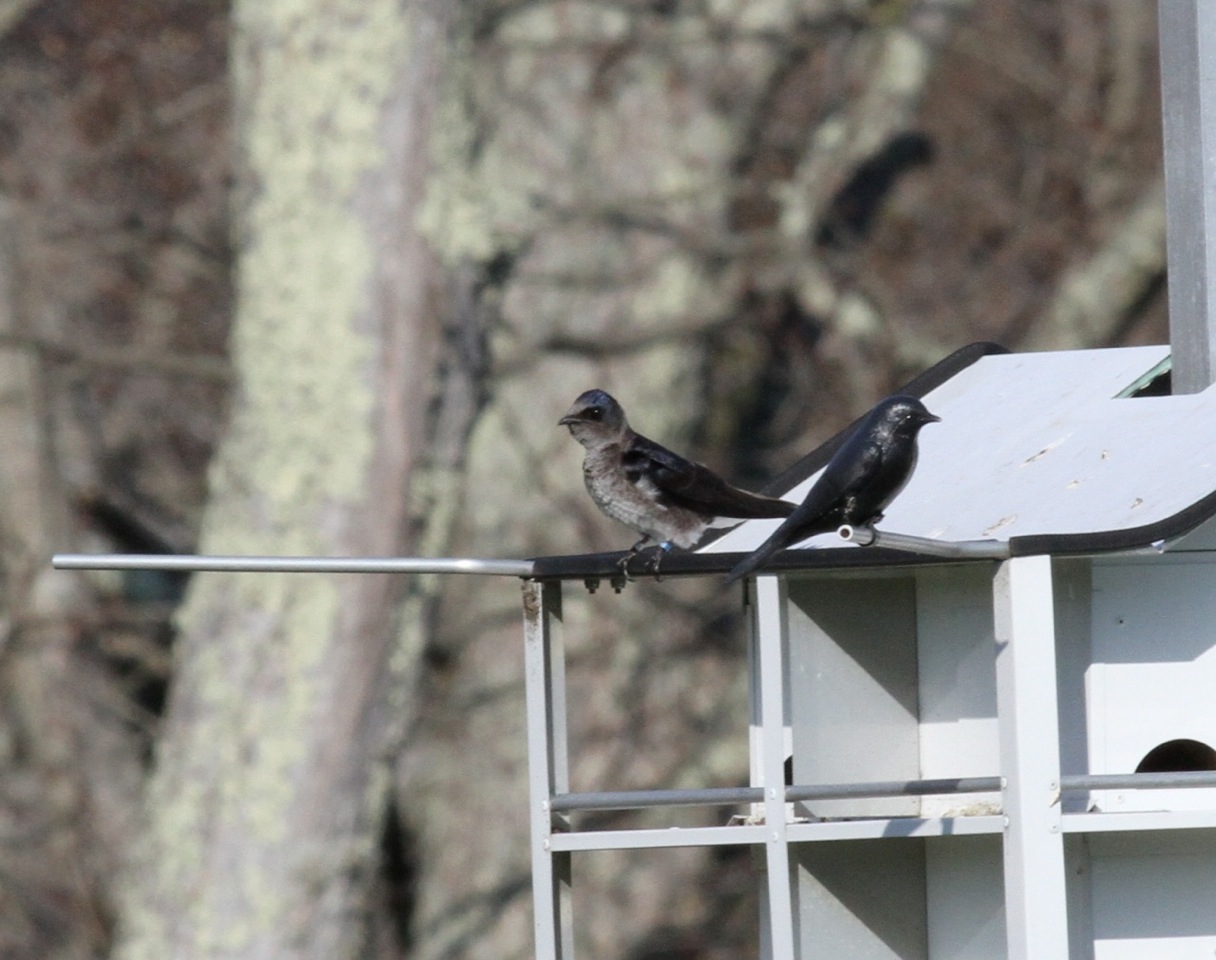
According to the Purple Martin Conservation Association, “The Dawnsong has proven to be one of the most powerful tools used today to attract martins to a new site. It is the recording of ASY (after second year), or adult black male martins singing a song in the predawn hours that is used to lure subadult martins (those that were raised last year) to their colony site. Anyone that uses this tape can tell you that IT WORKS.” Research by the Mille Lacs Band of Ojibwe Department of Natural Resources in Minnesota shows that playing recordings of Chimney Swift vocalizations results in swifts investigating artificial chimneys. 

An ASY purple martin (left) perches next to a decoy as it investigated the apartment.

The challenge with using sound recording at both the Sanctuary and at Hammonasset is that there is no access to a source of electricity. The solution is to use a solar-powered sound system. A suitable sound system is used by Audubon’s Project Puffin in Maine and by other seabird restoration projects that are typically located on isolated islands with no electricity. Murremaid Music Boxes builds custom sound systems for attracting birds throughout the world.

The solar panel for the chimney swift tower sound system is mounted on the roof of the bird blind.
Funds for the two sound systems came from an Audubon Collaborative Grant, a mini-grant from the Connecticut Ornithological Society, and matching funds from our members’ donations.
The Sanctuary sound system has attracted purple martins to investigate the apartments, however as of June 26, there are none nesting. The system at Hammonasset was installed late in the migration season and has not attracted any swifts. It will be used again during fall migration when swifts roost communally. Research indicates that swifts will use fall roost sites for nesting.
Further developments will be reported in the newsletter.


Monday, May 6, 2013

Cicadas are coming

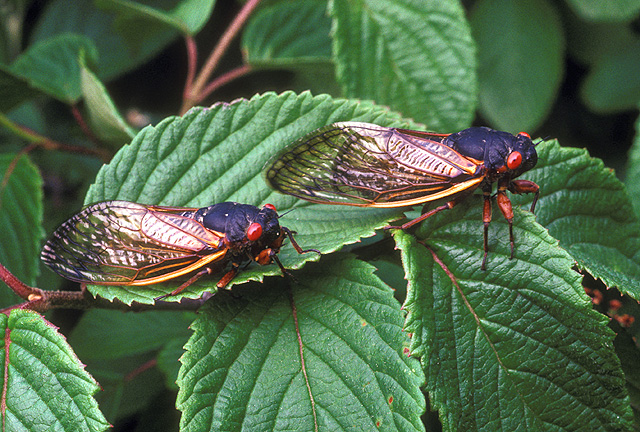
In the next few weeks, Connecticut will see the appearance of millions of 17-year cicadas. From Steve Grant in the Hartford Courant.

"It is amazing to see millions and millions and millions of cicadas all in one place," said Chris Simon, a professor in the department of Ecology and Evolutionary Biology at the University of Connecticut and a leading cicada researcher....
From East Haven east to Madison and Killingworth and north to at least Farmington, the cicadas will emerge in late May or the first week of June, climb to the tops of trees and then, a few days later, the males, seeking a mate, sing. After mating, the females cut tiny slits in small tree branches and lay their eggs. The adults live for only two to three weeks. In late summer the eggs hatch and the nymphs burrow into the ground to begin a new 17-year cycle.


Radiolab's Cicada Tracker has a form for reporting cicada sightings and an interactive map with soil temperature reports as well as cicada reports.


The site magicicada.org supports Dr. John R.Cooley's cicada research by providing information about cicadas and a tool for reporting cicada sightings.

Cicada inmages from en.wikipedia.org.

Sunday, April 21, 2013

Jack-In-The-Pulpit – An Unusual Wildflower

The Jack-in-the-pulpit (Arisaema triphyllum) is a spring wildflower of moist woodlands and may be encountered in oak-hickory forests and forested swamps. Though some consider this member of the Arum family a single species with several variations, others believe there to be three separate species of Jack-in-the-pulpit. 
This interesting plant flowers from April to June, but unless you look closely you will not see the actual flowers. What you will see is a green or purple striped spathe (pulpit) encircling and curving over a club-shaped spadix (Jack). Tiny flowers are found within the pulpit at the base of the spadix. All well and good, you say, but how do pollinators find the blossoms?

mchenry.edu

Like other members of the Arum family, such as skunk cabbage, the Jack-in-the-pulpit is believed to give off a fetid odor. Consequently, small flies in search of a rotting carcass on which to lay their eggs are attracted to the plant’s unobtrusive flowers. When the flies enter the spathe they brush against its pollen and carry it to other Jacks. 
The one or two leaves of this wildflower are divided into three leaflets that top long stalks. Impressive varieties can grow to three feet tall, though most you find will be less than a foot high. Once you learn to recognize its leaves, the Jack-in-the-pulpit hiding beneath will become easy to spot. 

Wikipedia

In late summer a bright cluster of red berries forms on a thickened stalk. Wood thrush and wild turkeys will eat these woodland fruits. Native Americans were known to consume the tuberous roots of the Jack-in-the-pulpit, which gives the plant another common name – Indian turnip. Since the roots contain calcium oxalate crystals and would cause a severe burning sensation if eaten raw, they were cooked thoroughly before being eaten.

Submitted by Cindi Kobak


Spring Field Trips

Central Park Migrants and Audubon’s Aviary at the New York Historical Society
New York City
Saturday May 4, 6:30 a.m. to 5:00 p.m.
Join Menunkatuck, Naugatuck Valley AS, and Audubon Greenwich at Central Park for a morning walk with “Birding Bob” DeCandido looking for spring migrants. The Park is a major attraction for neotropical migrants, and our walk through the Rambles is sure to feature great views of many warblers as well as tanagers, orioles, and thrushes.


Following lunch, we will go to the New York Historical Society for a guided tour of Audubon watercolors. The trilogy Audubon’s Aviary: The Complete Flock is a once-in-a-lifetime series that will explore the evolution of Audubon’s dazzling watercolors in the order in which they were engraved. Over three years (2013–2015) Audubon’s Aviary will feature all 474 stunning avian watercolors by Audubon in the collection. Engaging state-of-the-art media installations will provide a deeper understanding of the connection between art and nature.


We will be taking the Metro North 6:53 a.m. train from New Haven, arrive at Grand Central at 8:44, and take a bus or the subway to Central Park, arriving around 9:30. We will bird for about three hours, have lunch at the Boathouse, and then go to the NYHS. The return time to New Haven is open. Cost for the trip is $10 for the bird walk plus train fare, lunch, admission to the NYHS, and any other personal expenses.
Pre-registration is required. To register for this trip, please email nina@menunkatuck.org or visit the Field Trips registration form on the calendar page of our website at www.menunkatuck.org/index.php/calendar1

Birdathon
Various Locations
Saturday, May 11,
6:00 a.m. to 8:00 p.m.
Join us at Sandy Point in West Haven for beach nesting birds and gulls and terns, East Rock Park in New Haven and the Supply Ponds in Branford for migrating warblers and other neotropical birds, at Hammonasset Beach State Park for more migrants and water birds, and at other local birding spots for our annual all-day birding extravaganza.


The last few years we’ve averaged between 100 and 120 species during Birdathon. Join us for the entire day or at as many hot spots as suits your schedule.
Approximate Schedule
Sandy Point, 6:00 a.m.
East Rock Park, 8:00 a.m.
Supply Ponds, 11:00 a.m.
Shoreline drive, 2:00 p.m.
Hammonasset, 5:00 p.m.

Nature Walk at Lake Hammonasset
Killingworth
Saturday June 22, 10 a.m. - noon
John naturalist John Himmelman on a walk exploring a little-known RWA trail system on the border of Killingworth and Madison. We’ll pass through several habitats, including a small sand plain, as we search for birds, bugs, plants, herps, and other critters. Something interesting always pops up!
Please note that this walk is on Regional Water Authority property, and is accessible by permit only.  Menunkatuck Audubon Society has a permit for the walk.  Dogs are not allowed on RWA property.
Email jhimmel@comcast.net if you have any questions.


Pre-registration is required. To register for this trip, please email nina@menunkatuck.org, visit the Field Trips registration form on the calendar page of our website at www.menunkatuck.org/index.php/calendar1/. Directions to  the walk site will be provided when you register.

The Atlantic Flyway - Long Island Sound

Preserving And Restoring Long Island Sound is an important part of Audubon’s Saving Important Bird Areas conservation strategy for the Atlantic Flyway.
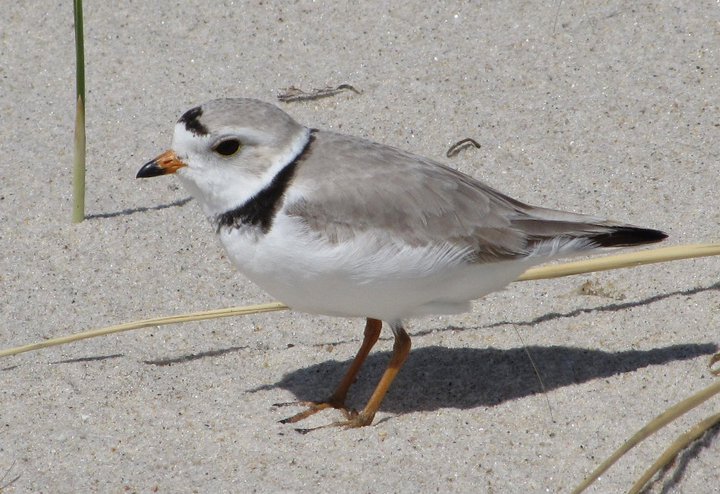
Species: Saltmarsh Sparrow, Roseate Tern, Piping Plover, and other shorebirds
Habitat: Long Island Sound 
Our Work: Roughly 10 percent of the U.S. population lives within 50 miles of Long Island Sound. A vital resource for birds and people alike, this rich estuary faces intense development pressure and recreational and commercial demands. Audubon is leading an ambitious effort to improve water quality, restore vital habitats, and promote biodiversity.
Conservation Impact: National Audubon policy staff joined forces with Audubon Connecticut and Audubon New York to rally federal, state, and local lawmakers as well as other stakeholders to endorse Sound Vision, a two-year action plan to protect and restore the Sound. Developed by the Long Island Sound Citizens Advisory Committee, the plan combines new and existing restoration projects with unified legislative efforts. Science plays a key role in Audubon’s work to protect and restore the Sound.
Conservation Outlook: Audubon national and state staff, Chapters, activists, and volunteers will continue working to reduce pollution and protect and restore habitat in this vital ecosystem.

Photo: Patrick Comins