Showing posts with label audubon. Show all posts

Sunday, February 23, 2014

The Atlantic Flyway

Corrie Folsom-O’Keefe, Audubon Connecticut’s IBA Coordinator, reports on wintering shorebirds in the Bahamas
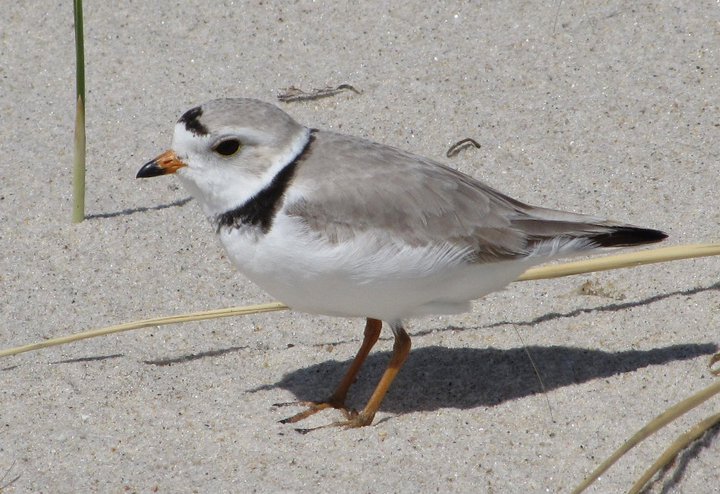
In Connecticut, the U.S. Fish and Wildlife Service began monitoring Piping Plovers in 1986 when the species first received protection under the Endangered Species Act. The CT DEEP Wildlife Division added their expertise with the passing of the Connecticut Endangered Species Act in 1989. The Audubon Alliance for Coastal Waterbirds joined the USFWS and the Wildlife Division and with the help of an amazing group of volunteers have been stewarding Piping Plovers and other beach-nesting birds along the Connecticut shoreline since 2012. Working together, staff, field technicians, and volunteers exclose nests, protecting them from predators; put up string fencing to reduce disturbance in nesting areas; and engage beachgoers and municipalities about beach-nesting species, the threats they face, and how to help. Through these efforts, the number of pairs of Piping Plover nesting in the state has slowly increased.
Protecting Piping Plover on their nesting grounds is very important to species recovery, but we also need to think about the species and the habitat it uses during migration and over the winter. Until very recently little was known about the locations used by Piping Plover in winter. The 2006 discovery of 400 Piping Plovers in the Bahamas by Audubon and the Bahamas National Trust triggered a closer look at the nation’s 700 islands and roughly 2,000 cays. During a 2011 census, researchers found over 1,000 Piping Plovers--perhaps 20% of the entire Atlantic Coast population--concentrated in one small cluster of Bahamian islands--Andros Island, the Joulter Cays (now a globally Important Bird Area), and the Berry Islands. The census filled in a huge gap in our understanding of these engaging and imperiled birds.
In January I joined National Audubon Society staff from along the Atlantic Flyway pitching in to locate additional sites important to Piping Plover and other shorebirds in the Bahamas. Traveling by flat bottom skiffs and on foot we inventoried shorebirds and other waterbirds on mudflats and along the edges of mangrove islands. 


Over the course of the five days we spend in East Grand Bahama, we were able to locate 526 Short-billed Dowitcher (possibly enough to qualify the area as a continentally Important Bird Area), 276 Least Sandpipers, 148 Semipalmated Plover, 50 Sanderling, approximately 75 Black-bellied Plover, 20 Ruddy Turnstone, 12 American Oystercatchers, between 7-14 Piping Plover, and 6 Wilson’s Plover.
The data not only increases our knowledge of shorebird wintering habitat but also will be used by the Bahamas National Trust to determine whether the area should be designated as a National Park. 
Surveying for shorebirds on their wintering grounds in East Grand Bahama was an awesome opportunity and I look forward to sharing my stories while on the beaches of Connecticut this summer.
(A longer version of this report is at goo.gl/1qnkfA.)
(Corrie will be at the March public meeting recruiting volunteers to assist with summer shorebird monitoring and spread the word about the Forest Bird Habitat Assessments that Audubon will be offering for landowners.)

Sunday, April 21, 2013

The Atlantic Flyway - Long Island Sound

Preserving And Restoring Long Island Sound is an important part of Audubon’s Saving Important Bird Areas conservation strategy for the Atlantic Flyway.
Species: Saltmarsh Sparrow, Roseate Tern, Piping Plover, and other shorebirds
Habitat: Long Island Sound 
Our Work: Roughly 10 percent of the U.S. population lives within 50 miles of Long Island Sound. A vital resource for birds and people alike, this rich estuary faces intense development pressure and recreational and commercial demands. Audubon is leading an ambitious effort to improve water quality, restore vital habitats, and promote biodiversity.
Conservation Impact: National Audubon policy staff joined forces with Audubon Connecticut and Audubon New York to rally federal, state, and local lawmakers as well as other stakeholders to endorse Sound Vision, a two-year action plan to protect and restore the Sound. Developed by the Long Island Sound Citizens Advisory Committee, the plan combines new and existing restoration projects with unified legislative efforts. Science plays a key role in Audubon’s work to protect and restore the Sound.
Conservation Outlook: Audubon national and state staff, Chapters, activists, and volunteers will continue working to reduce pollution and protect and restore habitat in this vital ecosystem.

Photo: Patrick Comins

Citizen Science: Hummingbirds at Home

Hummingbirds at Home – Audubon’s New Citizen Science Project

Hummingbirds visit our yards each spring to breed, looking for nectar from our gardens and feeders. Fascinating to watch, hummingbirds captivate us with their magical feats of flight and their showy colors. The Continental US is breeding home to 14 species of hummingbirds, with a few other species making rare appearances. 
Recent science reports that flowers are blooming earlier and earlier due to climate change. Some flowers are blooming as many as 17 days before the migrating hummingbirds arrive. The impact for migrating and breeding hummingbirds is unknown. 
Building on our Christmas Bird Count (CBC) legacy and the more recent success of the Great Backyard Bird Count (GBBC), Audubon is launching a new program called Hummingbirds at Home.

Photo: Nancy Albright

Through this new program Audubon’s goal is to gather data that will help document the hummingbirds’ journey, and better understand how changing flowering patterns and supplemental feeding by people relate to hummingbirds’ migration and breeding success, and also climate change. Since nectar is critical to hummingbirds, we’re asking people to document which flowering plants hummingbirds are feeding on in their backyards as well as whether hummingbird feeders are supplied and used. The Hummingbirds at Home program will provide an opportunity for citizen scientists to help us learn how these changes in the environment are impacting hummingbirds. 
In this family-friendly program, participants will log hummingbird sightings and the flowering plants or feeders they visit, with free mobile technology or on desktop computers. Participants can also view hummingbird sightings online in real time. Scientists will use the data to better understand how hummingbirds are impacted by feeders, non-native nectar sources in gardens, shifting flowering times, and climate change. 


Do you enjoy watching hummingbirds and want to become involved in this program? You can participate at a level that fits your schedule – from one sighting to watching hummingbirds over several weekends throughout the program. To learn more about this exciting citizen science project, go to www.audubon.org/citizenscience

Thursday, October 18, 2012

Audubon AFI


The Atlantic Flyway Initiative (AFI) lets nature serve as our guide. By following birds’ migratory paths we are letting them help us identify the places so important not just to their survival, but to all our lives. Audubon is then leveraging one of its strongest assets – its vast, grassroots network of people and conservation capability to power conservation on a hemispheric scale. It will succeed because it clearly focuses its conservation priorities around bird habitats within three distinct and prioritized habitats: forests, coastlines and saltmarshes. Birds, those environmental sentinels, will be the lens through which we gauge conservation threats and successes. By expanding and linking Audubon’s string of Important Bird Area pearls, the program will create an architecture for hemispheric conservation.