Sunday, December 18, 2011

Citizen Science: CoCoRaHS

CoCoRaHS is an acronym for the Community Collaborative Rain, Hail and Snow Network. CoCoRaHS is a unique, non-profit, community-based network of volunteers of all ages and backgrounds working together to measure and map precipitation (rain, hail and snow). By using low-cost measurement tools, stressing training and education, and utilizing an interactive Web-site, its aim is to provide the highest quality data for natural resource, education and research applications. This is a community project.  Everyone can help, young, old, and in-between. The only requirements to join are an enthusiasm for watching and reporting weather conditions and a desire to learn more about how weather can effect and impact our lives.
Each time a rain, hail or snow storm crosses your area, volunteers take measurements of precipitation from as many locations as possible. These precipitation reports are then recorded at the web site www.cocorahs.org. The data are then displayed and organized for many of the end users to analyze and apply to daily situations ranging from water resource analysis and severe storm warnings to neighbors comparing how much rain fell in their backyards.
Visit www.cocorahs.org for more information.

(From the January 2012 Newsletter)

Menunkatuck Audubon Society Annual Report 2011

Suzanne Botta Sullivan reports on the past year’s activities

I am pleased to report that 2011 was another outstanding year for Menunkatuck Audubon Society. With your financial support and the hard work of the Chapter Board members and many volunteers we have conducted a vast array of programs, field walks, and conservation studies, worked on habitat restoration, initiated Audubon at Home schoolyard gardens,  and much more. With great pride, we list here for your review the significant accomplishments achieved in 2011.
Conservation
The Hammonasset Beach State Park Purple Martin and Tree Swallow Project, begun in 2005, continues to produce outstanding results. With close monitoring, nesting attempts by European starlings and house sparrows have been interrupted and astonishingly high success rates for both the purple martin colonies and the tree swallows has followed (125 purple martin fledged and 135 tree swallows fledged).
A fifth Osprey Platform was built and is waiting for a predator guard before it is installed in the Park. Funding for the materials for the platform came from  generous gift from one of our members. All of the new platforms were used by nesting ospreys; unfortunately, only two fledged, the rest having been taken by great horned owls.
The project to Clear Willards Island of Non-native Invasive Plants continues with Menunkatuck and the DEEP working together to prepare the area for planting native shrubs.
An Audubon IBA Grant and an Audubon Collaborative Grant provided funds for planting 440 native fruit- and berry-bearing plants at the Guilford Salt Meadows Sanctuary.
In partnership with the Madison Conservation Commission, Menunkatuck started a Dune Restoration Project at West Wharf in Madison. Non-native invasive plants were removed, beach sand was added, and 8100 beach grass plugs were planted. 
Menunkatuck continues as a partner in Connecticut Amphibian Monitoring Project (C.A.M.P.) monitoring a 2.5 square mile area for amphibians. The monitoring is part of a statewide 15-year study sponsored through the Connecticut DEEP and Connecticut Science Center. Two years remain on this study to establish a base line of data on amphibian populations in Connecticut. Volunteers are trained to identify the 22 species of amphibians native to Connecticut and on how to use standard amphibian census techniques like frog call surveys, salamander cover searches, and night road transects for migrating amphibians.
Our partnership with the Project Limulus horseshoe crab tagging surveys had more than 40 volunteers conduct 24 surveys and tag 975 horseshoe crabs, almost triple last years’s total.
Fishing line recycling bins were installed at six area boat launches and fishing spots.
Advocacy
Menunkatuck partnered with Audubon Connecticut, Quinnipiac Valley Audubon Society, and other conservation organizations in Improving Water Quality and Wildlife Habitat in the Quinnipiac River Watershed. A series of films is being shown at the Yale Peabody Museum and at venues in the Wallingford area. Public forums with area legislators are also scheduled. The project is supported by a grant to Audubon Connecticut from the Quinnipiac River Fund.
Education and Outreach
The Birdathon was held in May. The day was a great success. Menunkatuck and The Audubon Shop participated together and a total of more than 100 species were counted. 
Menunkatuck continued to support King/Robinson Magnet School in New Haven. In June we sponsored two programs by A Place Called Hope live birds of prey program. In October we provided the transportation for 140 6th, 7th, and 8th graders to travel to Hammonasset to study the ecology of Long Island Sound. 


Audubon at Home
Menunkatuck began Audubon at Home activities in the Chapter area. Two AAH schoolyard gardens were begun. Lorrie Shaw obtained a grant from the Guilford Fund for Education to convert two areas at Melissa Jones Elementary School to hummingbird and butterfly gardens. A grant from the National Resource Conservation Service is being used to establish a hummingbird and butterfly planter garden at King/Robinson Magnet School in New Haven. 
Film Series
Menunkatuck began a series of film screenings in partnership with Audubon Connecticut and the Blackstone Library. Eight independent documentaries on environmental issues were shown to excellent reviews.
General Public Meeting
Public programs are held monthly on the second Wednesday of each month (except July and August). Last year the meetings featured a variety of topics and speakers, including programs on birding in Iraq, live raptors from A Place Called Hope, a trip to Namibia and Botswana, and a close look at invertebrates. Our meetings are free and open to the public.
Field Programs
This year Menunkatuck provided seven exciting field programs, including a duck/eagle hop along the Connecticut River, a woodcock search at Durham Meadows, a spring trip to the RWA Big Gulph Recreation Area in North Branford, and a fall trip to the Livingston Ripley Waterfowl Conservancy in Litchfield.
Newsletter 
The newsletter is printed six times per year. In addition to informing our members and friends about Menunkatuck’s activities and events we include Cindi Kobak’s “Bio-bits” natural history essays. The Newsletter also includes tips on going green and information about upcoming events in our chapter area. Citizen Science highlighted six opportunities for helping scientists with their research.
Web Site
Menunkatuck maintains a web site that features a blog, a photo gallery, and a variety of educational information and links. We are also on Facebook with frequent posts with photos, event notices, and links to bird and environmental articles on the Internet. Menunkatuck’s web site featured birds for Audubon’s Birding on the Net contest.
Volunteers
Menunkatuck volunteers contributed more than 650 man-hours to conservation, advocacy, education, and outreach activities.
Conclusion
Menunkatuck continues to be a leader in environmental education, conservation, and advocacy. Please join the Menunkatuck Board in making 2012 a truly banner year. If you can become more involved please e-mail me at president@menunkatuck.org or speak to any Board member at any event.
~Suzanne Botta Sullivan

Monday, November 14, 2011

American Crows - Intelligent Opportunists

Most people, including preschoolers, can identify the American crow (Corvus brachyrhynchos). 
wikimedia.org
A large black bird with a thick bill, the ubiquitous crow walks and flies through our lives on a regular basis. It ranges throughout Connecticut, common in urban, suburban and rural areas. It likes open areas with trees, at home in both farm country and city parks. A member of the corvid family, the crow is considered one of the most intelligent species in the bird world. 
Crows are omnivores, eating anything from crops (such as corn and fruit), to insects, snakes, nestling birds, roadkill, and garbage. Families tend to travel and feed together, so where you see one crow you are likely to see more. A family unit can consist of a mated pair and their offspring from previous years, as well as this year’s young. Together they may defend a territory of about 100 acres. Watch them walk through the leaf litter at the edge of the woods or through a grassy area as they scare up insects and snakes. Carrion is also readily eaten, but since the crow is not equipped with a bill that can tear open a fresh carcass, it relies on other animals, such as vultures and mammals, to begin the process. It is not uncommon to see a flock of crows “waiting in the wings” for their turn to feed on larger carrion. The author once observed three crows follow a fisher through the woods as it searched for prey. The crows flew from tree to tree above the fisher, ready and willing to clean up any leftover scraps from the fisher’s next meal.
Dennis Riordan
Crows are opportunists, scavenging scraps from landfills, trash dumpsters, and suburban compost piles. And they have benefited from our human development in other respects as well. As we create more and more “edge habitat” by fragmenting tracts of forest, we provide these “edge predators” with the opportunity to find and plunder the nests of smaller songbirds. 
As winter closes in you may notice small flocks of crows pass overhead in late afternoon. They are returning to their communal winter roost for the night. Typically, the large congregation of roosting crows will disperse from their roost trees in the morning as they spend the day in search of food. By mid-afternoon they begin to head back to the roost. Small flocks will join up at pre-roosting sites before continuing on. If you are along one of the crows’ flight paths this winter, you are likely to see them pass by on a daily basis.

Submitted by Cindi Kobak

(From the November, 2011 Newsletter)

Winter Field Trips

Livingston Ripley Waterfowl
Conservancy, Litchfield, CT
Sunday, November 20, 1:00-4:00 p.m.

LRWC Photo
Livingston Ripley Waterfowl Conservancy, located in Litchfield, Connecticut, is a nonprofit organization dedicated to the research and protection of rare and endangered ducks and other waterfowl  throughout the world. The organization maintains an aviary with a diverse collection of waterfowl from around the world for educational and research purposes.  
Join Menunkatuck Audubon Society for a tour of LRWC’s aviaries, and experience a unique opportunity to view and learn about waterfowl from around the world.  Please dress warmly and be prepared to spend up to two hours outside during the tour.  Boots or other waterproof shoes are recommended in case of muddy conditions at the facility.
Pre-registration is required, and a $10 per person donation to LRWC is requested.  To register for this trip, please contact Nina Levenduski e-mailing nina@menunkatuck.org. Carpools from the shoreline area may be set up, inquire with the leader if interested. 

Winter Birdwatching at Sandy Point and New Haven Harbor
Saturday, December 3, 9:00 to 11:00 a.m.

USFWS
Sandy Point in West Haven is recognized by Audubon Connecticut as an Important Bird Area (IBA), and a great place to see wintering shorebirds, ducks and other waterfowl.  Join Nina Levenduski and other Menunkatuck birders for a walk on the beaches to look for wintering birds. Beginning birders welcome! Please bring binoculars and dress in layers for cold and windy conditions. Camera, hand lens, field guides, etc. are also suggested.
Optional lunch stop after the walk at a local burger/seafood joint.
Meet at the parking area at the junction of Beach Street and Second Avenue in West Haven.
To sign up for the trip, please contact Nina Levenduski by e-mailing nina@menunkatuck.org. Bad weather the day of the trip cancels.

(From November, 2011 Newsletter)

Film Screenings: Green Fire, Tapped, Living Downstream, and Ghost Bird at Peabody Museum and Blackstone Library

Green Fire: Aldo Leopold and a Land Ethic for Our Time
Saturday, November 12, 1:00-3:30 p.m.
Yale Peabody Museum, New Haven

Green Fire: Aldo Leopold and a Land Ethic for Our Time is the first feature length documentary film ever made about famed conservationist Aldo Leopold. The film explores Aldo Leopold’s life in the early part of the twentieth century and the many ways his land ethic idea continues to be applied all over the world today. 
The film shares highlights from Leopold’s life and extraordinary career, explaining how he shaped conservation in the twentieth century and still inspires people today. Although probably best known as the author of the conservation classic A Sand County Almanac, Leopold is also renowned for his work as an educator, philosopher, forester, ecologist, and wilderness advocate.
Green Fire illustrates Leopold’s continuing influence by exploring current projects that connect people and land at the local level. The film portrays how Leopold’s vision of a community that cares about both people and land—his call for a land ethic—ties all of these modern conservation stories together and offers inspiration and insight for the future.
This film screening is part of the Quinnipiac River Watershed project.

Tapped
Sunday, November 27, 2:00 – 3:30 p.m.
Blackstone Memorial Library, Branford

Is access to clean drinking water a basic human right or a commodity that should be bought and sold like any other article of commerce? Stephanie Soechtig’s debut feature is an unflinching examination of the big business of bottled water.
Tapped is a behind-the-scenes look into the unregulated and unseen world of an industry that aims to privatize and sell back the one resource that ought never to become a commodity: our water.
From the plastic production to the ocean in which so many of these bottles end up, this inspiring documentary trails the path of the bottled water industry and the communities which were the unwitting chips on the table. This film is cosponsored by Audubon Connecticut.


Living Downstream
Friday, December 9, 7:00-8:00 p.m.
Yale Peabody Museum, New Haven

Living Downstream is an eloquent feature length documentary that charts the life and work of biologist, author, cancer survivor and cancer prevention advocate, Sandra Steingraber. 
Living Downstream is based on Sandra’s book of the same name, and, like the book, documents the growing body of scientific evidence that links human health with the health of our environment. 
This film screening is part of the Quinnipiac River Watershed project.


Ghost Bird
Sunday, December 18, 2:00-3:30 p.m.
Blackstone Memorial Library, Branford

Set in a murky swamp overrun with birders, scientists, and reporters, Ghost Bird explores the limits of certainty, the seductive power of hope, and how one phantom woodpecker changed a sleepy Southern town forever.
In 2005, scientists announced that the Ivory-billed woodpecker, a species thought to be extinct for 60 years, had been found in the swamps of Eastern Arkansas. Millions of dollars poured in from the government while ornithologists and birders flooded the swamps to find the rare bird. Down the road, the town of Brinkley, Arkansas - itself on the brink of extinction – was transformed by the hope, commerce, and controversy surrounding their feathered friend. Now six years later, the woodpecker remains as elusive as ever. Ghost Bird brings the Ivory-bill’s blurry rediscovery into focus revealing our uneasy relationship with nature and the increasing uncertainty of our place within it.
This film is cosponsored by Audubon Connecticut.


(From the November, 2011 Newsletter)

Citizen Science: Project Squirrel

No matter where you live, city or suburb, from the Midwest to the East Coast, Canada to California, whether squirrels live in your neighborhood or not, you are encouraged to become a squirrel monitor.
Squirrels are useful organisms to study because they are active during the day and everyone has an opinion about them. Additionally, squirrels can be important indicators of local ecology because they are resident in small territories and active year round, they require a range of resources that are also important to many other urban animals, and their populations rise and fall with the same predators and environmental conditions that affect our neighborhood wildlife.
What to do:  Take a look around your home, office, school, or anywhere you are and, whether you see squirrels or not, visit projectsquirrel.org/ and click on the green button to submit your observations.  We want to know where squirrels are as well as where they aren’t.
How often:  You can submit as many observations from as many places as you like.  It’s most effective to submit at least one observation per site per season but the more observations the better.
Who:  Anyone of any age can participate.  Make it an office game or a classroom project, compare notes with friends in other states, get your family involved—everyone can observe nature.
For complete details, visit projectsquirrel.org/.
(From the November, 2011 Newsletter)

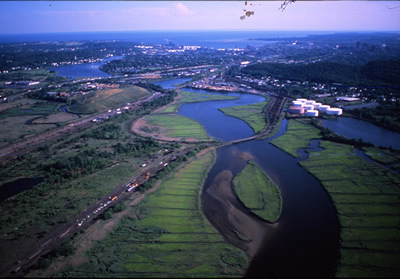
Quinnipiac River Watershed Is Focus of Project to Improve Water Quality


Menunkatuck Audubon Society has partnered with Audubon Connecticut, Yale Peabody Museum, and other local environmental organizations on a project to raise awareness among legislators, homeowners, and the general public about ways to reduce both non-point and point sources of pollution and to improve habitat for birds and other wildlife within the Quinnipiac River Watershed. Improving Water Quality and Wildlife Habitat in the Quinnipiac River Watershed will promote legislative, municipal, corporate and personal actions to improve water quality and habitat for wildlife in the QRW through a combination of (1) legislative forums in New Haven and Wallingford, (2) a film series coupled with panel discussions to be held at the Yale Peabody Museum in New Haven, and at venues in Wallingford and Meriden, and (3) outreach materials to be displayed and disseminated at a wide range of venues.
Funded by a grant from the Quinnipiac River Fund to Audubon Connecticut, the project will address the need to reduce non-point and point sources of pollution and to improve habitat for wildlife by providing people with the tools, resources, and motivation to take on actions that can make our homes, schools, businesses, and municipal spaces in the Quinnipiac River Watershed healthy and vibrant while also providing sustainable habitats for birds and other wildlife. Improving habitat for wildlife also improves natural infrastructure for reducing non point source pollution.
The project is part of the Audubon At Home in Connecticut program of Audubon Connecticut, part of the larger National Audubon Society’s mission. The goal of the AAH program in Connecticut is to inspire people to incorporate conservation actions into their daily lives by providing the support and resources necessary to do so, in order to conserve birds, wildlife, and habitat. AAH educates the public on water conservation and water quality issues, encourages reduction of pesticides and other harmful chemicals, removing invasive plant species and replacing them with native plants that support wildlife naturally.
The film screenings at the Yale Peabody Museum are:
Vanishing of the Bees, October 26 The film starts at 6:30 with the doors opening at 5:30. 
Green Fire, Aldo Leopold and a Land Ethic for Our Time, November 12
Doors will open at 1:00. After the screening of the film you will have a chance to ask local environmental leaders questions about their work and address concerns about the Quinnipiac River.
Living Downstream, December 9
The film starts at 6:30 with the doors opening at 5:30.
The Work of 1,000 will be shown during the Peabody’s annual Earth Day celebration.
Visit the Peabody website for complete details.
Representatives from local environmental organizations (please see below for a complete list of organizations) will be at each of the film screenings to speak with the public about the Quinnipiac River Watershed and the work they are doing to protect its valuable natural resources.
The Quinnipiac River Fund was created “to improve the environmental quality of the Quinnipiac River and the New Haven Harbor and the watersheds of these water bodies, and otherwise to benefit the environment of these resources.” The fund was established in 1990 by a court settlement of litigation between the Connecticut Fund for the Environment, the Natural Resources Defense Council, and the Upjohn Company, concerning wastewater discharges from the Upjohn Company’s plant in North Haven. The Upjohn Company was required to pay $1.2 million dollars over a three year period. This money was used to establish a permanent fund. The net income from this fund is used to fund projects that will improve the quality of the Quinnipiac River Watershed.
(From the November 2011 Newsletter)